 Zero
UK Corporate Wellness Market Size, Share, Trends and Outlook 2034
UK corporate wellness market size increased from USD 3.0 Billion in 2025 to USD 3.2 Billion in 2026, and is projected to reach USD 4.6 Billion by 2034, CAGR of 4.64% during 2026-2034.
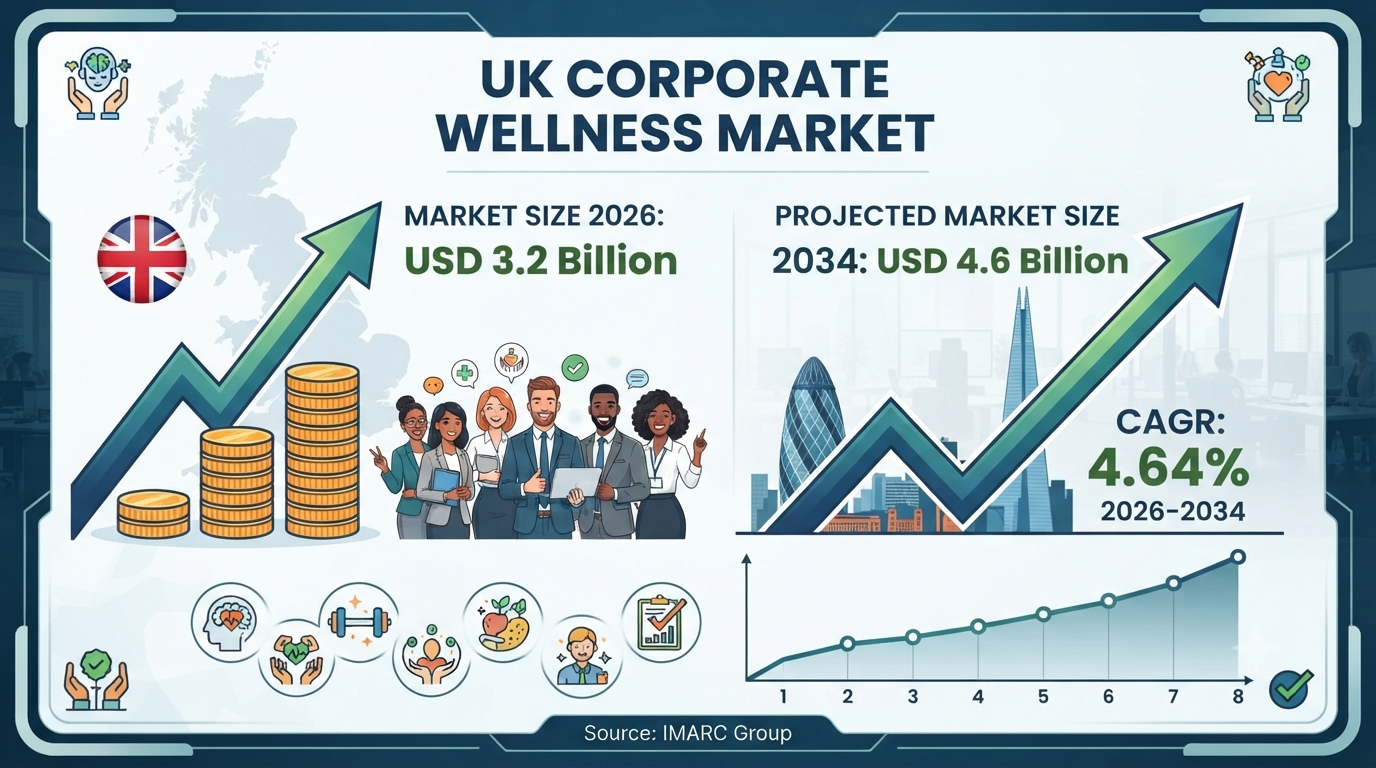
The UK corporate wellness market is expanding steadily as employers treat workforce health as a direct driver of productivity , retention , and business performance . absence, with CIPD reporting an average of 9.4 days per employee in its 2025 survey (up from 5.8 days before the pandemic), together with growing demand for mental health support and hybrid-friendly programs, is sustaining investment in wellness services across UK organizations. The market is strategically important to the UK economy as it supports workforce participation, helps contain absence-related costs, and strengthens employers' ability to attract and retain talent.
The UK corporate wellness market is poised for sustained expansion, driven by employers' focus on preventive healthcare, the mainstreaming of mental health and stress management support, and the adoption of wearables and health-tracking apps. With a projected CAGR of 4.64% through 2034, the market presents significant opportunities for established providers and new entrants focused on digital, integrated, and personalized wellness solutions.
UK CORPORATE WELLNESS MARKET SUMMARY
The UK corporate wellness market programs and services designed to improve the physical, mental, and financial health of employees, delivered encompassing employers, insurers, occupational health specialists, and digital platforms. The ecosystem includes wellness program providers, health insurers and occupational health organizations, fitness and nutrition consultants, psychological therapists, technology platforms, and employer organizations of every size . consultants, psychological therapists, and organizations/employers), delivery mode (onsite and offsite), organization size (small, medium, and large scale organizations), and region .
· Market Size (2025): USD 3.0 Billion, with the market growing to USD 3.2 Billion in 2026.
· Forecast (2034): USD 4.6 Billion, exhibiting a CAGR of 4.64% during 2026-2034.
· Study Period: Historical period 2020-2025; base year 2025; forecast period 2026-2034.
· Key Services: Health risk assessment, fitness, smoking cessation, health screening, nutrition and weight management, stress management, and others.
· Delivery Modes: Onsite and offsite programs, increasingly blended through hybrid-friendly and digital delivery.
· Organization Size: Small, medium, and large scale organizations, with larger employers typically offering broader occupational health and wellbeing provision (86% of organizations with 250+ employees offer occupational health services, versus 69% across all employers, per CIPD).
· Top Demand Themes: Mental health and stress management (cited as a focus of wellbeing activity by 89% of organizations in CIPD's 2025 survey), preventive healthcare, and wellness for remote and hybrid workforces.
· Key Regions: London, South East, North West, East of England, South West, Scotland, West Midlands, Yorkshire and The Humber, East Midlands, and others.
· Regulatory Backdrop: Statutory Sick Pay became payable from the first day of sickness absence from 6 April 2026 under the Employment Rights Act 2025, adding to employers' focus on prevention absence.
PORTER'S FIVE FORCES ANALYSIS – UK CORPORATE WELLNESS MARKET
The competitive dynamics of the UK corporate wellness market can be analyzed using Porter's Five Forces framework. The assessment below is an analytical view based on the market structure described in this report.
Porter’s Five Forces Analysis – UK Corporate Wellness Market
· Competitive Rivalry: Moderate to High, with insurers, occupational health specialists, digital wellbeing platforms, and fitness-benefit aggregators all competing for employer budgets. Rivalry is driven by the breadth of services on offer, the push toward integrated platforms, and cost-effectiveness scrutiny (56% of organizations weigh cost-effectiveness when selecting health-related benefits, per CIPD). Business implication: providers must differentiate through measurable outcomes, clinical credibility, and seamless employee experience rather than price alone.
· Supplier Power: Low to Moderate. Content, clinical talent, technology, and gym or studio networks are available from many sources, but specialist capacity such as qualified psychological therapists and occupational health champions can be constrained. Business implication: providers should secure therapist and clinician networks and build proprietary content and data assets to protect service quality and margins.
· Buyer Power (Employers): High. Employers, particularly large organizations with dedicated HR and benefits teams, compare providers, negotiate on price, and demand evidence of return on investment; finding budget amid rising business costs is the top challenge in wellbeing provision (39%, per CIPD). Business implication: providers must demonstrate impact on absence, engagement, and retention, and offer flexible pricing and scalable packages across small, medium, and large employers.
· Threat of Substitutes: Moderate. Employers can choose in-house wellbeing initiatives, employee assistance programs, health insurance and cash-plan benefits, or general-purpose employee benefits platforms instead of dedicated wellness programs, and individuals can use consumer wellness apps directly. Business implication: providers must articulate clear outcomes and integrate with existing benefits to remain the preferred solution.
· Threat of New Entrants: Moderate to High. Digital delivery has lowered barriers for app-based and platform-led entrants, while clinical services, data security, and established employer relationships remain barriers at scale. Business implication: incumbents should build defensible positions through clinical quality, integrated data, and long-term employer partnerships.
Competitive Rivalry – Moderate to High (Healthy)
Multi-tier competition spans large insurers and healthcare groups (such as Bupa and Nuffield Health), integrated wellbeing and rewards providers (such as Vitality), digital mental health and fitness platforms (such as Headspace for Work, Unmind, and Wellhub), and specialist assessment and employee support providers – driving differentiation through service breadth, technology integration, and clinical credibility rather than destructive price competition.
Recent partnerships, including Virgin Media O2's collaboration with Money Wellness (May 2025), Sun Life's tie-up as a Workday Wellness partner (March 2025), and Storytel's partnership with Wellhub (September 2024), reflect active ecosystem building as providers broaden their offerings across financial, physical, and mental wellbeing.
Request for Sample Report: https://www.imarcgroup.com/uk-corporate-wellness-market/requestsample
MARKET GROWTH DRIVERS:
Rising Employer Focus on Productivity, Absence, and Mental Health
Several key factors are propelling the expansion of the UK corporate wellness market . Employers increasingly view a healthy workforce as a productive one, and awareness of the link between employee well-being and business success is growing. Sickness absence has reached a record 9.4 days per employee per year in CIPD's 2025 survey, compared with 5.8 days before the pandemic and 7.8 days in 2023, and mental ill health is the most commonly cited cause of long-term absence (41% of organizations list it among their top three causes). Against this backdrop, mental health and stress management remain a focus of wellbeing activity for 89% of organizations, while wellness programs are also seen as a way to reduce healthcare costs and attract and retain talent . Poor mental health is estimated to cost UK employers around GBP 56 billion a year through presenteeism, turnover, and absence.
MARKET GROWTH DRIVERS:
Hybrid Work, Technology Adoption, and Regulatory Change
The UK corporate wellness market is also benefiting from evolving ways of working and accelerating technology adoption . Remote and flexible work has increased the need for holistic wellness solutions covering both physical and mental health, encouraging hybrid-friendly programs that serve remote and on-site staff alike. Wearables and health-tracking apps provide personalized insights that make programs easier to run and engage with, supporting the shift toward preventive healthcare . Regulatory change is adding momentum: under the Employment Rights Act 2025, Statutory Sick became Pay payable from the first day of sickness absence and the Lower Earnings Limit was removed from 6 April 2026, extending sick pay eligibility to an estimated 1.3 million additional workers. These changes raise the cost of unmanaged absence and encourage employers to invest in prevention, early intervention, and occupational health support.
UK CORPORATE WELLNESS MARKET SEGMENTATION
Segmentation analysis provides a detailed view of the UK corporate wellness market by category:
- Service Insights: Health Risk Assessment, Fitness, Smoking Cessation, Health Screening, Nutrition and Weight Management, Stress Management, Others.
- Category Insights: Fitness and Nutrition Consultants, Psychological Therapists, Organizations/Employers.
- Delivery Insights: Onsite, Offsite.
- Organization Size Insights: Small Scale Organizations, Medium Scale Organizations, Large Scale Organizations.
- Regional Insights: London, South East, North West, East of England, South West, Scotland, West Midlands, Yorkshire and The Humber, East Midlands, Others.
COMPETITIVE LANDSCAPE
The UK corporate wellness market features a diverse competitive landscape, with multi-tier competition spanning healthcare and insurance groups, integrated wellbeing providers, and digital-first platforms. Key companies operating in the market include:
- Bupa (The British United Provident Association Limited)
- Nuffield Health
- Health Education Ltd
- Vitality (Vitality Health)
- Wellhub
- Headspace for Work
- Unmind
- Spectrum Life
- Benendsen World
- Champion Health
Strategic developments are shaping the competitive arena, notably partnerships that broadening wellbeing ecosystems, such as Virgin Media O2's collaboration with Money Wellness to support financially vulnerable customers (May 2025), Sun Life's strategic partnership as a Workday Wellness partner (March 2025), and Storytel's partnership with Wellhub to add audiobooks to its platform (September 2024).
REGIONAL ANALYSIS:
Regional dynamics within the UK corporate wellness market are shaped by the distribution of employment, workforce size, and the mix of office-based and on-site work. The market is analyzed across the following regions:
· London: A major concentration of corporate head offices and large employers, typically supporting strong adoption of comprehensive, digitally enabled wellbeing programs and mental health services.
· South East and East of England: Home to many large and mid-sized employers and commuter-belt workforces, supporting demand for hybrid-friendly programs, fitness, and preventive health screening.
· North West, Yorkshire and The Humber, and East Midlands: Diverse employer bases spanning services, manufacturing, and logistics, where onsite programs, health screening, and musculoskeletal and stress management support are relevant.
· West Midlands and South West: Mixed industrial and services economies, with demand for programs that serve both on-site and remote employees.
· Scotland and Others: Growing employer interest in wellbeing support, with delivery increasingly enabled by digital and offsite models that extend access beyond major cities.
Note: Regional commentary is indicative and based on the structure of employer bases in each region; regional market values are available in the full report.
RECENT INDUSTRY DEVELOPMENTS
April 2026: Employment Rights Act 2025 reforms took effect, making Statutory Sick Pay payable from the first day of sickness absence and removing the Lower Earnings Limit, increasing employer focus on prevention absence and workforce wellbeing.
September 2025: CIPD's Health and wellbeing at work 2025 report, supported by Simplyhealth, recorded average sickness absence of 9.4 days per employee per year, the highest level in more than 15 years.
May 2025: Virgin Media O2 partnered with Money Wellness to support financially vulnerable customers.
May 2025: Vantage Circle launched a Cycle-to-Work Challenge to promote employee wellness.
March 2025: Sun Life became a strategic Workday Wellness partner.
September 2024: Storytel partnered with Wellhub to add audiobooks to Wellhub's platform.
Key Aspects Required for the UK Corporate Wellness Market
· Market Performance: USD 3.0 Billion in 2025, growing to USD 3.2 Billion in 2026, with a projected trajectory to USD 4.6 Billion by 2034.
· Market Outlook: A 4.64% CAGR during 2026-2034 indicates steady growth across health risk assessment, fitness, stress management, and other wellness services.
· Growth Drivers: Employer focus on workforce productivity and well-being; rising sickness absence and mental health needs; remote and flexible work; emphasis on preventive healthcare; wearables and health-tracking apps; wellness as a lever to reduce healthcare costs and attract and retain talent; Statutory Sick Pay reforms from April 2026.
· Competitive Landscape: A multi-tier structure of healthcare and insurance groups (Bupa, Nuffield Health), integrated wellbeing providers (Vitality, Health Management Ltd), and digital platforms (Wellhub, Headspace for Work, Unmind, Spectrum Life, Benenden Health, Champion Health), with growing partnership activity.
· Value Chain Analysis: From clinical, content, and technology inputs (therapists, nutrition and fitness consultants, assessment tools, wearables and apps) through wellness program providers, platforms, and insurers, to employer purchasing via HR and benefits teams, employee engagement, and outcome measurement.
· Industry Trends: Greater focus on mental health, counseling, and stress management; hybrid-friendly programs for remote and on-site staff; technology integration through wearables and health apps; and a shift from reactive absence management toward preventive care.
· Strategic Recommendations: Prioritize integrated mental health and stress management offerings; develop hybrid-friendly, digitally enabled delivery; demonstrate measurable outcomes on absence, engagement, and retention; build partnerships across insurance, benefits, and technology ecosystems; and tailor packages by organization size, from small employers to large enterprises.
Note: If you need any specific information that is not covered currently within the scope of the report, we will provide the same as a part of customization.
Request Customization: https://www.imarcgroup.com/request?type=report&id=21929&flag=E
· Report Format, Delivery, and Customization Details
· Report Format Mode: PPT, PDF, and Excel
· Report Delivery Mode: Online Delivery, Physical Delivery
· Report Delivery Time: Report Delivered Over Email within 24 to 48 hours. If requested by the client, a physical copy will be delivered within three to ten days.
· Report Confirmation Mode: Yes via Email
· Report Customization Mode: Yes via Email / Call
· Report Table of Content: Yes
· Report List of Figures: Yes
· Report Methodology Mode: Yes
· Request For Sample Report: Yes
Zero Press のデータで見るこのリリース
Zero Press が取り込んだ配信データから自動集計しています。カテゴリ別・業界別のより詳しい分析は週間動向レポートで毎週公開しています。
このジャンルのリリースを書くときのガイド
このリリースの配信元
Rahul
企業概要・過去のリリース・提供資料は企業ページでご覧いただけます。
-
株式会社テイチクエンタテインメント 役員体制に関するお知らせ
株式会社テイチクエンタテインメント
-

「KINDAI Ramen Venture 近大をすすらんか。」 キャンパス内で学生が経営するラーメン店の六代目店主が決定
学校法人近畿大学
-

「淡海のいろ(R)」と連携した滋賀県 駅めぐりスタンプラリー 「もういーかい いろよーかい」12月1日より実施します!
成安造形大学
-

【定価の数倍で取引される"幻のデイトナ"が銀座に】
株式会社陽吉グループ
-

おこさまぷれ〜と。の東阪Zeppツアー『いただきます♾️』、上野の「ADWATER」で告知開始
AD.WATER
-

海洋風力タービン市場は、2025年に855億米ドルと推定され、2036年には3,138.8億米ドルに達すると予測され、予測期間(2026~2036年)
Panorama Data Insights Ltd.
-

「家族なんだから」が、助けを求める声を奪っていく。累計約4万人の相談に携わってきた臨床心理士・神崎肖子が、家族危機の知られざる現実を語る講演会を開催
神崎肖子
-
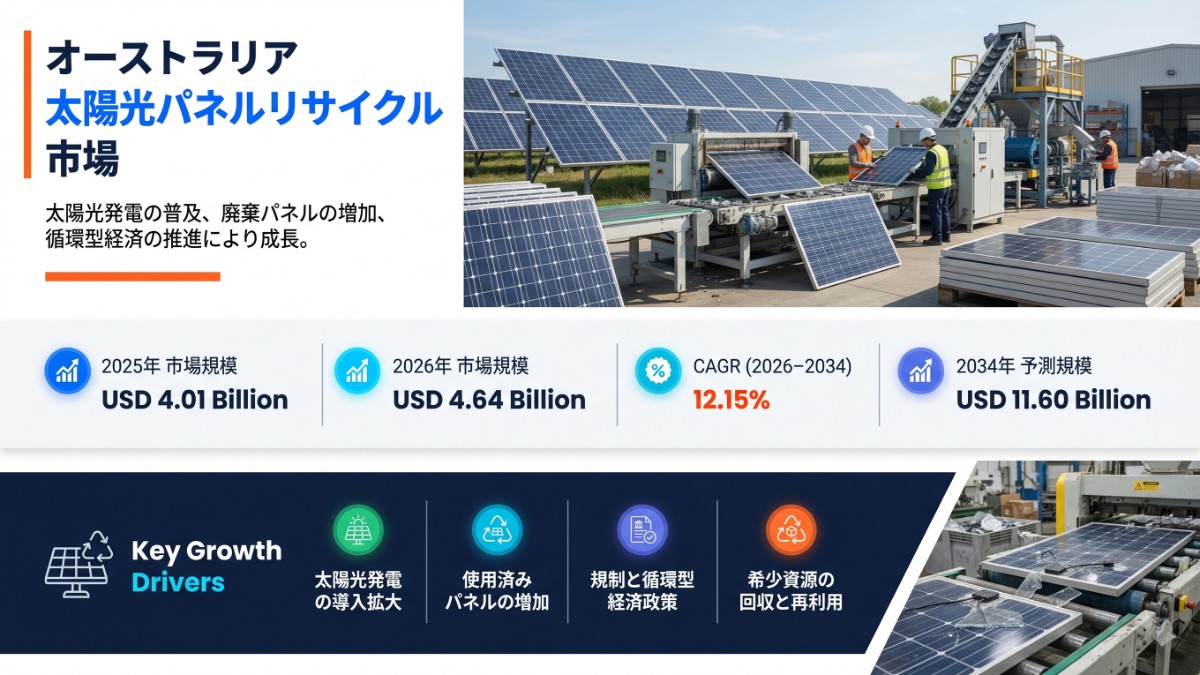
オーストラリア太陽光パネルリサイクル市場規模、シェア、成長率および分析レポート(2026年~2034年)
Arlo Bennett
-

北米のミューチュアルファンド:市場シェア分析、産業動向・統計データ、成長予測(2026年~2031年)
株式会社グローバルインフォメーション
-
欧州のアロマテラピーディフューザー:市場シェア分析、業界動向と統計、成長予測(2026年~2031年)
株式会社グローバルインフォメーション
-
エラストマー膜:市場シェア分析、業界動向と統計、成長予測(2026年~2031年)
株式会社グローバルインフォメーション
-

U-KWON、ONE PACT、8TURNらが出演 「LIVE : DO YOUR BEST Vol.03」を12月20日に開催
株式会社MOREDAY